Corylus avellana contorta
£25.00
Description
Quick Facts
- Common Name: Harry Lauder’s Walking Stick, Corkscrew Hazel, Contorted Hazel
- Botanical Name: Corylus avellana ‘Contorta’
- Plant Type: Deciduous shrub / small tree
- Mature Height: 2–4m
- Mature Spread: 2–4m
- Flowering Period: January to March
- Flower Colour: Yellow catkins (male flowers)
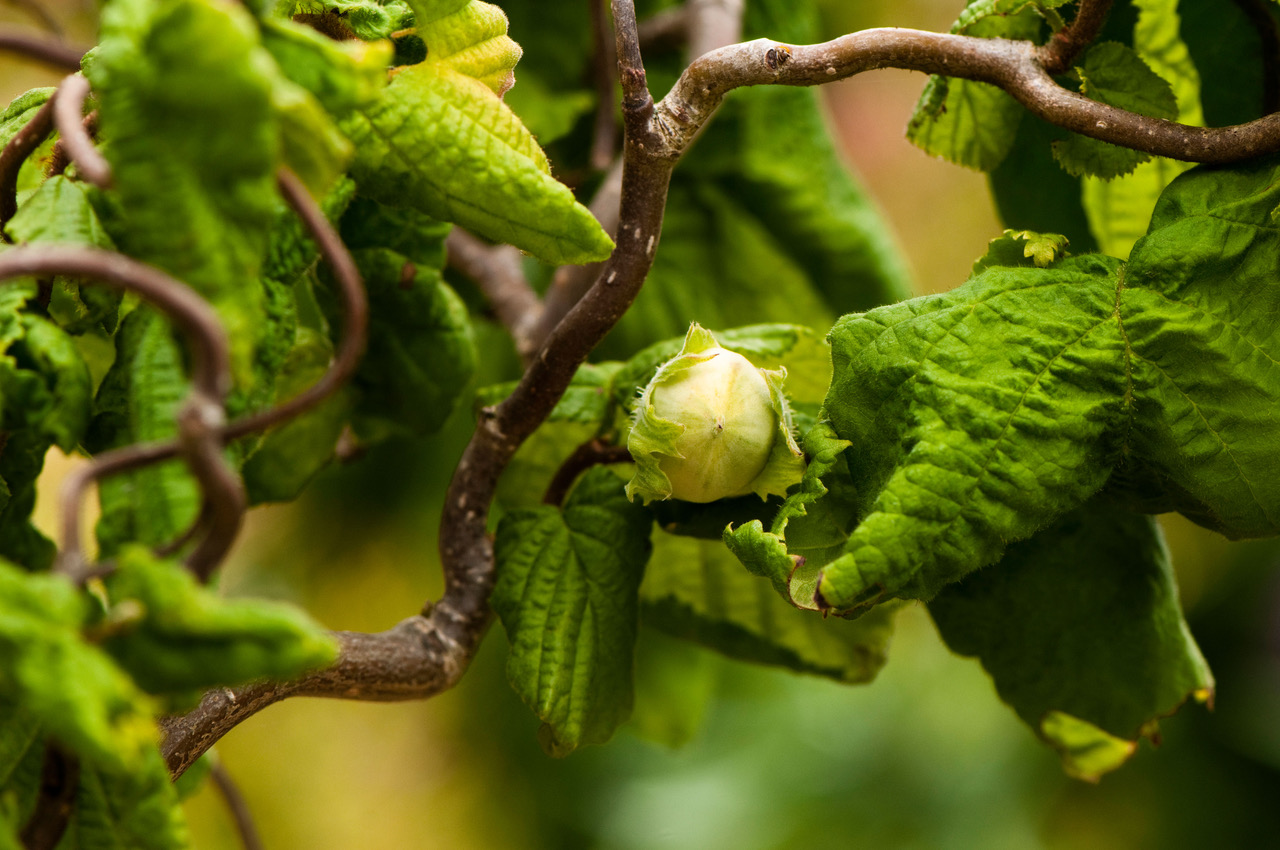
- Foliage: Mid-green, rounded leaves; contorted stems provide winter interest
- Hardiness: RHS H6 (hardy throughout UK & Ireland)
- Soil Requirements: Moist, well-drained soil (tolerates most soils)
- Aspect: Full sun to partial shade
- Maintenance: Low to moderate (remove suckers; light pruning)
Description
There are few plants that feel quite as magical in winter as Corylus avellana ‘Contorta’—a true garden character, loved for its wonderfully twisted, corkscrew branches that turn bare-season borders into living sculpture. When the rest of the garden is quiet, this contorted hazel steps forward, its looping stems catching frost, low sunlight, and the eye, again and again.
In late winter, the show becomes even more charming as pale yellow catkins appear along the winding branches, gently swaying in the breeze like little tassels. Come spring and summer, fresh green leaves unfurl to soften the silhouette, creating a full, leafy shrub that still hints at the drama beneath—then, as autumn fades, those sculptural branches are revealed once more.
A classic choice for Irish gardens, ‘Contorta’ is wonderfully hardy, tolerant of a wide range of soils, and happy in sun or light shade. It’s the kind of plant that earns its keep all year, but truly shines when you need structure most—through winter and early spring.
Plant it where you’ll see it daily: near a path, beside a doorway, framed against a wall, or lit from behind on a frosty morning. And don’t forget to steal a few branches for the vase—cut stems are absolutely stunning indoors, especially when paired with winter berries, evergreens, or early bulbs.
Caragh Garden Notebook
Planting:
- Space plants 2–3m apart to allow the contorted framework to be appreciated as it matures.
- Plant container-grown specimens year-round, ideally in spring (March–May) or autumn (September–October).
- Choose a spot in full sun to partial shade—sun gives the best catkin display and strongest winter outline.
- Dig a generous hole, loosen the soil, and mix in well-rotted compost to help establishment.
- Plant at the same depth as in the pot, firm in gently, water well, and mulch.
Soil Preparation:
- Prefers moist, well-drained soil but is very adaptable (loam, clay, or sandy soils all fine).
- Tolerates neutral to slightly acidic soils best, but is generally unfussy.
- Improve heavy clay with organic matter to aid drainage; improve light sandy soils with compost to hold moisture.
- Mulch annually to conserve moisture and feed the soil.
Seasonal Care:
- Water during dry spells in the first 1–2 years while establishing.
- Feed in spring with a general-purpose fertiliser if growth is slow, though established plants rarely need it.
- Little pruning required—remove any dead, crossing, or awkward stems in late winter.
IMPORTANT: Suckers (Keep the Twist True):
- Many plants are grafted onto straight hazel rootstock.
- Remove any straight shoots/suckers from the base immediately (cut flush to the origin), otherwise they can overtake the contorted growth.
Cutting for Indoors:
- Cut a few contorted stems in winter for arrangements—place in water indoors and they’ll last beautifully.
- Catkin-bearing stems are especially lovely from late winter onwards.
Propagation:
- Typically propagated by grafting. (Home propagation is possible via layering, but grafted plants give the most reliable form.)
Related products
-

Camellia japonica Rosso – 1/2 Standard
£550.00 Select options This product has multiple variants. The options may be chosen on the product page -
Magnolia x loebneri ‘Leonard Messel’
Price range: £45.00 through £550.00 Select options This product has multiple variants. The options may be chosen on the product page -
Camellia japonica ‘Mrs Charles Cobb’
£360.00 Select options This product has multiple variants. The options may be chosen on the product page -

Erica arborea Albert’s Gold
£7.50 Select options This product has multiple variants. The options may be chosen on the product page