
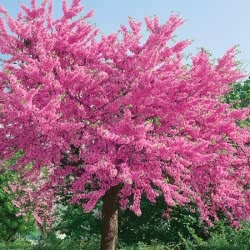
Cercis siliquastrum / Judas Tree
£145.00
Description
A tree that feels like spring arriving early. Cercis siliquastrum is loved for its unforgettable flush of rosy-pink, pea-like flowers that appear on bare branches (and even along the trunk) before the leaves unfurl. It’s architectural, romantic, and quietly dramatic — a real “stop-you-in-your-tracks” specimen for smaller gardens, courtyards, and sunny borders.
Once in leaf, the canopy softens into a cloud of heart-shaped, fresh green foliage, often turning buttery-yellow tones in autumn. It’s a beautiful choice if you want something that looks curated and design-led, without feeling fussy.
Quick Facts
- Botanical Name: Cercis siliquastrum
- Common Name: Judas Tree
- Plant Type: Deciduous flowering tree
- Ultimate Height: 6–10m (often smaller in gardens)
- Ultimate Spread: 4–8m
- Growth Rate: Moderate
- Flowering Period: April–May
- Flower Colour: Deep pink to magenta
- Foliage: Heart-shaped green leaves; autumn yellow
- Position: Full sun to light shade
- Soil: Well-drained soil; tolerant once established
- Hardiness: Hardy in Ireland & the UK (best sheltered from harsh winds)
Why You’ll Love It
- Early spring flowers on bare wood for maximum impact
- Heart-shaped leaves that soften the look through summer
- Perfect statement tree for design-focused gardens and courtyards
- Great for pollinators when little else is in bloom
Where to Plant
Cercis siliquastrum shines in a warm, sheltered spot where you can enjoy the spring display up close — near a patio, along a path, or as a focal point in a front garden. It pairs beautifully with Mediterranean-style planting, gravel gardens, and contemporary schemes.
How to Care for Your Cercis
Keep watering well through the first couple of growing seasons, especially in dry spells. Once established, it’s relatively low-maintenance. Pruning is rarely needed — simply remove any dead, damaged, or crossing branches in late summer or winter, and allow the natural shape to do its thing.
Caragh Garden Notebook
If you’re planting for impact, underplant with spring bulbs (alliums, tulips, narcissus) and then let soft grasses and lavender take over for summer. The contrast of those pink blossoms against silvery foliage is pure magic.
Additional information
| Pot Size |
|---|
Related products
-

Ginkgo Biloba ‘Mariken’ Standard Tree
Price range: £340.00 through £480.00 Select options This product has multiple variants. The options may be chosen on the product page -
Carpinus betulus Fastigiata / Upright Hornbeam – Standard Trees
Price range: £245.00 through £650.00 Select options This product has multiple variants. The options may be chosen on the product page -
Camellia sasanqua Standard
Price range: £450.00 through £495.00 Select options This product has multiple variants. The options may be chosen on the product page -
Camellia japonica Rosso Standard Tree
£460.00 Select options This product has multiple variants. The options may be chosen on the product page