

Cornus kousa Chinensis
£85.00
Frequently Bought Together


Description
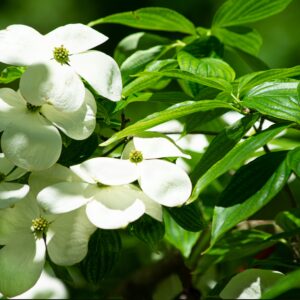
Graceful, elegant and beautifully architectural, Cornus kousa var. chinensis is a small deciduous tree or large shrub that brings a calm, refined beauty to the garden. In early summer, its branches are layered with large creamy-white bracts that appear to float above the foliage, creating one of the loveliest flowering displays of the season.
This is a plant with real presence, but never anything showy. It offers a gentle kind of drama — beautiful in flower, handsome in leaf and often finished with rich autumn colour and ornamental fruits later in the year.
Why we love it
Cornus kousa var. chinensis has a lovely poise to it. The flowering display feels light and elegant, and its branching habit gives it year-round value. It’s a wonderful choice when you want something sculptural, seasonal and quietly special.
Cornus kousa var. chinensis has a lovely poise to it. The flowering display feels light and elegant, and its branching habit gives it year-round value. It’s a wonderful choice when you want something sculptural, seasonal and quietly special.
Appearance
This deciduous tree or large shrub has a broad, layered habit with softly pointed green leaves and elegant horizontal branching. In early summer, small true flowers are surrounded by large creamy-white bracts, creating a long-lasting floral display. Later in the season, strawberry-like pink-red fruits may appear, followed by beautiful autumn foliage in shades of red, orange and purple.
This deciduous tree or large shrub has a broad, layered habit with softly pointed green leaves and elegant horizontal branching. In early summer, small true flowers are surrounded by large creamy-white bracts, creating a long-lasting floral display. Later in the season, strawberry-like pink-red fruits may appear, followed by beautiful autumn foliage in shades of red, orange and purple.
Best for
- Feature planting in lawns or borders
- Smaller gardens needing a statement tree
- Courtyard and sheltered garden settings
- Layered planting schemes with year-round interest
- Gardens designed with structure and softness in balance
Position
Best planted in full sun or partial shade. A sheltered position will help it thrive and show off its branching and flowering to best effect.
Best planted in full sun or partial shade. A sheltered position will help it thrive and show off its branching and flowering to best effect.
Soil
It prefers fertile, moisture-retentive but well-drained soil and appreciates a position that does not become too dry.
It prefers fertile, moisture-retentive but well-drained soil and appreciates a position that does not become too dry.
Growth habit
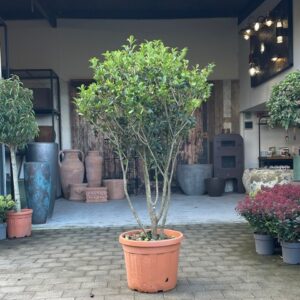
Cornus kousa var. chinensis forms a small deciduous tree or large multi-stemmed shrub with a broad, layered, architectural habit. It becomes more beautiful with age as the branching develops.
Cornus kousa var. chinensis forms a small deciduous tree or large multi-stemmed shrub with a broad, layered, architectural habit. It becomes more beautiful with age as the branching develops.
Seasonal interest
- Early summer: large creamy-white bracts and delicate flowers
- Summer: fresh green foliage and elegant form
- Late summer to autumn: ornamental fruits
- Autumn: rich red, orange and purple foliage
- Winter: attractive branching silhouette
Caragh’s Garden Notebook
A beautiful specimen plant
This is a wonderful choice for a spot where it can be appreciated properly — whether as a lawn feature or as a focal point in a generous border.
This is a wonderful choice for a spot where it can be appreciated properly — whether as a lawn feature or as a focal point in a generous border.
Quietly architectural
Its layered branching gives it structure without heaviness, making it especially useful in gardens that want softness as well as form.
Its layered branching gives it structure without heaviness, making it especially useful in gardens that want softness as well as form.
Worth giving space to
Allow room around it so the shape can develop naturally and the flowering display can be enjoyed from every angle.
Allow room around it so the shape can develop naturally and the flowering display can be enjoyed from every angle.
Planting idea
Underplant with ferns, grasses, hellebores or soft woodland-style perennials for a calm, elegant combination.
Underplant with ferns, grasses, hellebores or soft woodland-style perennials for a calm, elegant combination.
Related products
-

Cornus kousa ‘Robert’s Select’
£195.00 Select options This product has multiple variants. The options may be chosen on the product page -
Acer palmatum Katsura
Price range: £120.00 through £600.00 Select options This product has multiple variants. The options may be chosen on the product page -
Osmanthus Aquifolium – Parachute Form
£270.00 Select options This product has multiple variants. The options may be chosen on the product page -
Cupressus sempervirens ‘Totem’
£150.00 Select options This product has multiple variants. The options may be chosen on the product page