
Corylus avellana Red Majestic
Price range: £20.00 through £85.00
Frequently Bought Together



Description
Quick Facts
- Common Name: Red Majestic Corkscrew Hazel, Red Contorted Hazel
- Botanical Name: Corylus avellana ‘Red Majestic’
- Plant Type: Deciduous shrub / small tree
- Mature Height: 2–3m
- Mature Spread: 2–3m
- Flowering Period: January to March
- Flower Colour: Yellow catkins (male flowers)
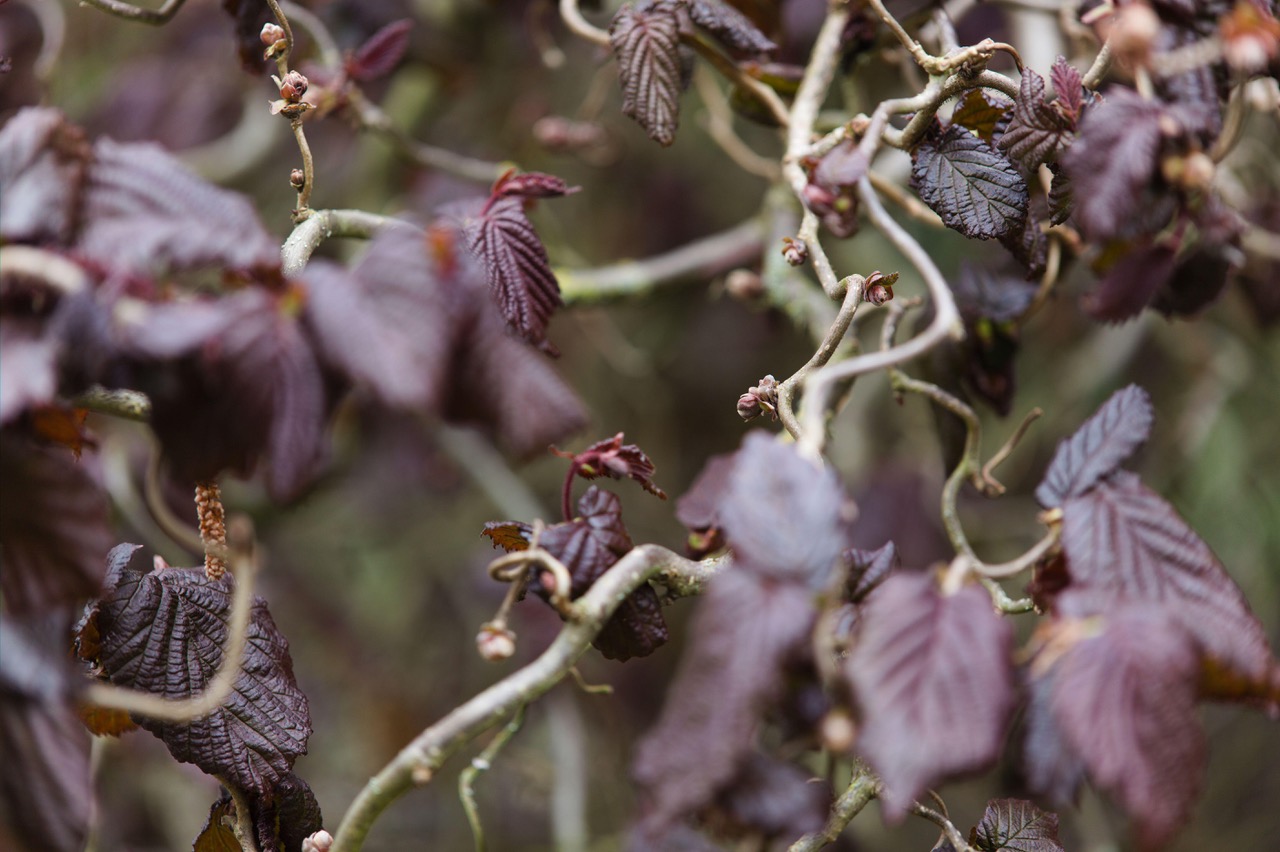
- Foliage: Deep burgundy to purple-red leaves (best colour in sun); contorted, twisting stems for winter interest
- Hardiness: RHS H6 (hardy throughout UK & Ireland)
- Soil Requirements: Moist, well-drained soil (tolerates most soils)
- Aspect: Full sun to partial shade (best leaf colour in sun)
- Maintenance: Low to moderate (remove suckers; light pruning)
Description
If you love the sculptural winter drama of a corkscrew hazel but want a richer, more dramatic summer look, Corylus avellana ‘Red Majestic’ is the one. It brings the same wonderfully twisted, contorted branches—looping and curling like living calligraphy—then dresses them in deep burgundy foliage for a second season of show-stopping impact.
In late winter, before the leaves arrive, pale yellow catkins appear along the twisting stems, adding movement and a soft glow to the bare garden. Then, as spring unfolds, the foliage emerges in rich wine-red tones, holding its colour beautifully through summer (especially in a sunny spot). The result is a plant with genuine four-season value: architectural winter structure, early catkins, dramatic summer leaf colour, and a bold silhouette again as autumn fades.
Hardy and reliable in Irish and UK gardens, ‘Red Majestic’ is an ideal feature plant for borders, courtyards, and contemporary spaces where you want something a little unexpected—ornamental, characterful, and effortlessly stylish. It’s also brilliant for cutting: a few contorted stems in a vase instantly make a room feel curated.
Caragh Garden Notebook
Planting:
- Space plants 2–3m apart so the twisting framework can be appreciated as it matures.
- Plant container-grown specimens year-round, ideally in spring (March–May) or autumn (September–October).
- Choose a position in full sun to partial shade—full sun gives the deepest foliage colour and best overall performance.
- Dig a generous hole, loosen the soil well, and incorporate compost to help establishment.
- Plant at the same depth as in the pot, firm in gently, water thoroughly, and mulch.
Soil Preparation:
- Prefers moist, well-drained soil but is very adaptable.
- Thrives in loam and clay (as long as drainage is reasonable) and copes well with most garden soils.
- Improve heavy clay with organic matter to help drainage; improve sandy soils with compost to retain moisture.
- Mulch annually to feed the soil and keep roots cool and evenly moist.
Seasonal Care:
- Water during prolonged dry spells in the first 1–2 years while establishing.
- Feed in spring with a general-purpose fertiliser if needed, though established plants are typically self-sufficient.
- Minimal pruning required—remove dead, damaged, or crossing branches in late winter.
IMPORTANT: Suckers (Protect the Red Twist):
- Many plants are grafted onto straight hazel rootstock.
- Remove any straight shoots/suckers from the base immediately (cut flush to where they emerge). These can be more vigorous and may overtake the contorted red growth if left.
Colour Tips:
- For the richest burgundy foliage, plant in full sun.
- In deeper shade, leaves may become greener and the colour less intense.
Cutting for Indoors:
- Cut a few contorted stems in winter for arrangements—stunning on their own, or paired with berries and evergreens.
- Catkin-bearing stems are especially lovely from late winter onwards.
Propagation:
- Typically propagated by grafting to maintain true form and colour.
Related products
-

Heuchera Palace Purple
£10.50 Select options This product has multiple variants. The options may be chosen on the product page -
Acer dissectum Garnet / Japanese Maple
Price range: £145.00 through £950.00 Select options This product has multiple variants. The options may be chosen on the product page -

Loropetalum chinense Black Pearl – 1/4 Standard
£130.00 Select options This product has multiple variants. The options may be chosen on the product page -
Acer palm. Little Princess
Price range: £150.00 through £195.00 Select options This product has multiple variants. The options may be chosen on the product page