
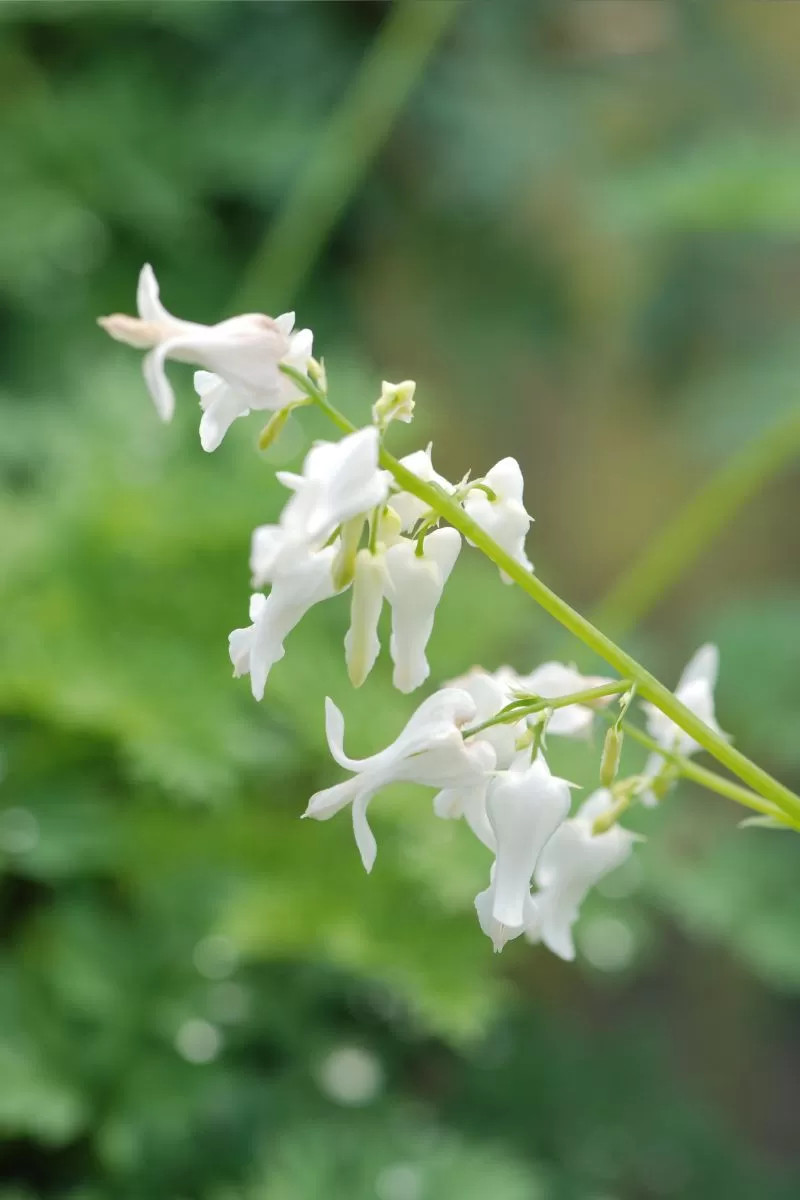
Dicentra amore titanium
£20.00
Frequently Bought Together


Description
Quick Facts
- Common Name: Bleeding Heart, Amore Bleeding Heart
- Botanical Name: Dicentra ‘Amore Titanium’
- Plant Type: Herbaceous perennial
- Mature Height: 25–40cm
- Mature Spread: 30–45cm
- Flowering Period: April to June (often with repeat flowering into summer in good conditions)
- Flower Colour: Rich pink, heart-shaped flowers
- Foliage: Finely cut, fern-like grey-green to blue-green foliage
- Hardiness: RHS H6 (hardy throughout UK & Ireland)
- Soil Requirements: Moist, well-drained, humus-rich soil
- Aspect: Partial shade (tolerates sun with moisture)
- Maintenance: Low
Description
Dicentra ‘Amore Titanium’ is a modern take on a much-loved classic—bringing the romance of bleeding hearts in a more compact, garden-friendly form, with beautifully refined foliage and a long season of flower. It’s the kind of plant that instantly softens a border, adding a gentle, cottage-garden charm that still feels fresh and contemporary.
In spring, elegant arching stems rise above a neat mound of finely cut, fern-like leaves, carrying clusters of rich pink, heart-shaped flowers that dangle like tiny lockets. The foliage has a cool grey-green to blue-green tone, which makes the pink blooms feel even more luminous, and gives the plant a calm, sophisticated presence even when it’s not in flower.
Perfect for shady borders, woodland-style planting, and containers, ‘Amore Titanium’ is especially lovely near paths or seating areas where you can enjoy the detail up close. It pairs beautifully with ferns, hostas, hellebores, and spring bulbs, and it’s a brilliant choice for adding early-season colour in spots where many flowering plants struggle.
Caragh Garden Notebook
Planting:
Space plants 30–40cm apart for a full, softly layered look. Plant in spring (March–May) or early autumn (September) so roots establish before extremes of heat or cold. Choose a position in partial shade—morning sun with afternoon shade is ideal. In cooler areas it will tolerate more sun, but only if the soil stays evenly moist. Dig a generous hole and enrich with well-rotted compost or leaf mould; Dicentra loves humus-rich soil. Plant at the same depth as in the pot, firm in gently, water well, and mulch.
Space plants 30–40cm apart for a full, softly layered look. Plant in spring (March–May) or early autumn (September) so roots establish before extremes of heat or cold. Choose a position in partial shade—morning sun with afternoon shade is ideal. In cooler areas it will tolerate more sun, but only if the soil stays evenly moist. Dig a generous hole and enrich with well-rotted compost or leaf mould; Dicentra loves humus-rich soil. Plant at the same depth as in the pot, firm in gently, water well, and mulch.
Soil Preparation:
Prefers moist, well-drained, humus-rich soil. Avoid waterlogged ground in winter and very dry soil in summer. Improve sandy soils with compost and leaf mould to retain moisture. Improve heavy clay with organic matter (and a little grit if needed) to help drainage. Mulch annually to keep roots cool and moisture levels steady.
Prefers moist, well-drained, humus-rich soil. Avoid waterlogged ground in winter and very dry soil in summer. Improve sandy soils with compost and leaf mould to retain moisture. Improve heavy clay with organic matter (and a little grit if needed) to help drainage. Mulch annually to keep roots cool and moisture levels steady.
Container Growing:
Excellent in containers for patios and shaded courtyards. Use a pot with good drainage holes and a rich compost (adding a little leaf mould is ideal). Water regularly—don’t let compost dry out completely. Feed lightly in spring with a balanced fertiliser to support flowering.
Excellent in containers for patios and shaded courtyards. Use a pot with good drainage holes and a rich compost (adding a little leaf mould is ideal). Water regularly—don’t let compost dry out completely. Feed lightly in spring with a balanced fertiliser to support flowering.
Seasonal Care:
Low maintenance. Deadhead spent flowers to encourage repeat blooming and keep the plant tidy. Keep watered during dry spells, especially in late spring and early summer when it’s flowering. In autumn, as foliage fades, cut back to ground level. Mulch in late autumn or early spring to protect the crown and feed the soil.
Low maintenance. Deadhead spent flowers to encourage repeat blooming and keep the plant tidy. Keep watered during dry spells, especially in late spring and early summer when it’s flowering. In autumn, as foliage fades, cut back to ground level. Mulch in late autumn or early spring to protect the crown and feed the soil.
Pests & Problems:
Generally trouble-free. Watch for slugs and snails on young growth in spring. Good air circulation and steady moisture help prevent stress and leaf scorch.
Generally trouble-free. Watch for slugs and snails on young growth in spring. Good air circulation and steady moisture help prevent stress and leaf scorch.
Division:
Divide established clumps in early spring or early autumn every few years if needed to maintain vigour. Lift carefully, split into sections with healthy roots and shoots, and replant immediately into enriched soil.
Divide established clumps in early spring or early autumn every few years if needed to maintain vigour. Lift carefully, split into sections with healthy roots and shoots, and replant immediately into enriched soil.
Related products
-

Camellia japonica ‘Mrs Charles Cobb’
£360.00 Select options This product has multiple variants. The options may be chosen on the product page -
Magnolia Honey Tulip
£65.00 Select options This product has multiple variants. The options may be chosen on the product page -
Magnolia kobus
Price range: £65.00 through £600.00 Select options This product has multiple variants. The options may be chosen on the product page -
Clematis montana Wilsonii
£20.00 Select options This product has multiple variants. The options may be chosen on the product page