Malus domestica ‘Braeburn’
£30.00
Frequently Bought Together
Description
Quick Facts
- Common Name: Braeburn Apple
- Botanical Name: Malus domestica ‘Braeburn’
- Plant Type: Deciduous fruit tree
- Mature Height: 3–4m (as a standard tree; can be kept smaller with pruning or on dwarfing rootstock)
- Mature Spread: 2.5–3.5m
- Flowering Period: April to May
- Flower Colour: White to pale pink
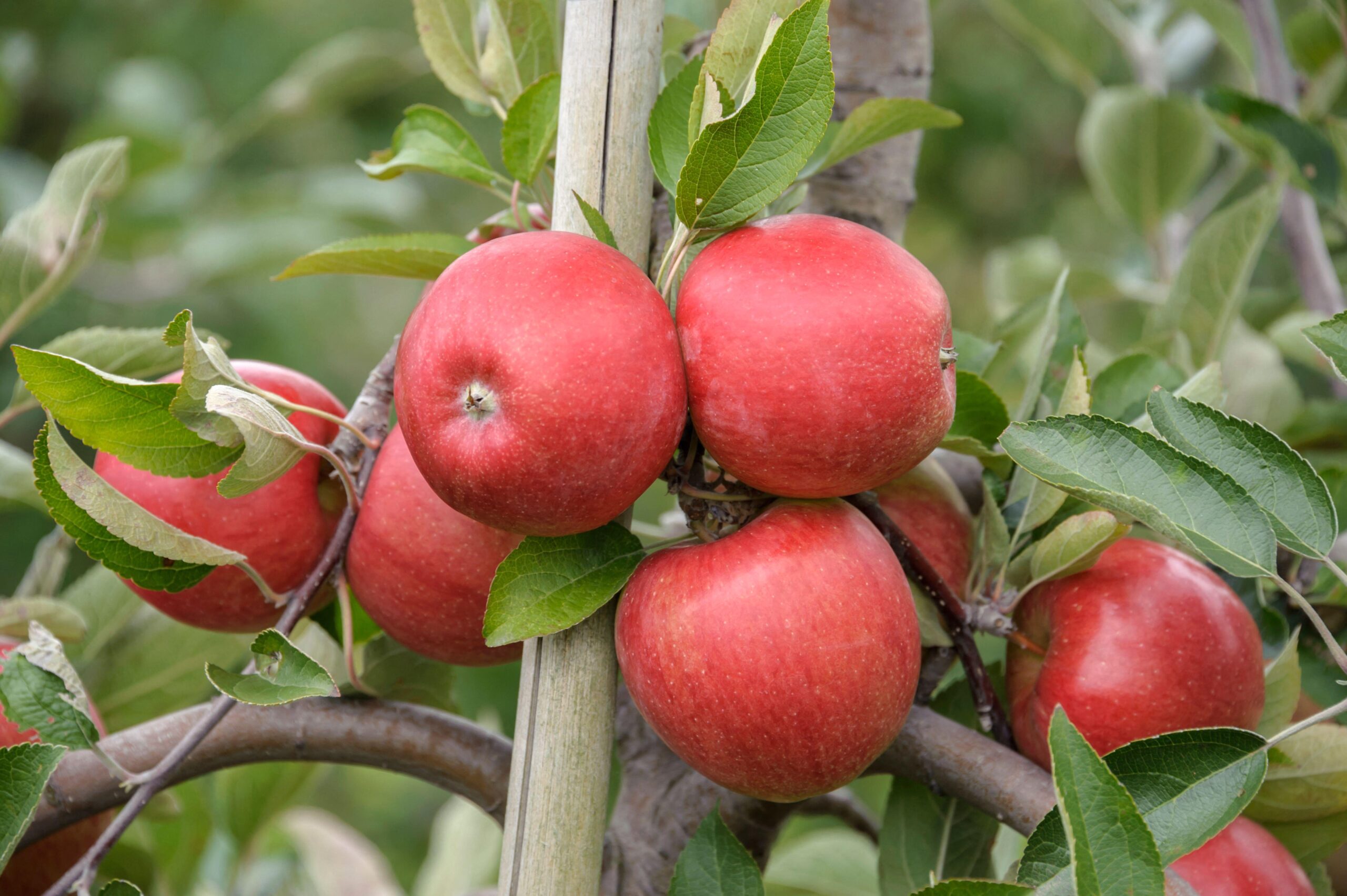
- Fruit: Medium to large, crisp apples; greenish-yellow flushed with red, sweet-sharp flavour; harvest October
- Foliage: Mid-green, turning yellow in autumn
- Hardiness: RHS H6 (hardy throughout UK & Ireland)
- Soil Requirements: Moist, well-drained, moderately fertile
- Aspect: Full sun (essential for best fruiting and colour)
- Maintenance: Moderate (annual pruning and thinning recommended)
Description
Malus domestica ‘Braeburn’ is one of the most popular and reliable apple trees for gardens and orchards—famed for its crisp, juicy fruit and excellent keeping qualities. With its neat, spreading habit and generous spring blossom, it’s as beautiful as it is productive, bringing structure and seasonal drama to any garden.
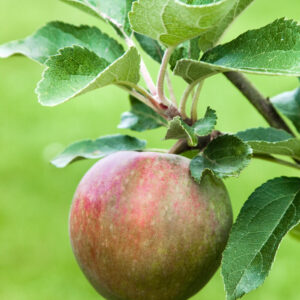
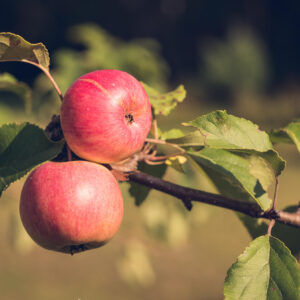
In spring, the tree is covered with clusters of white to pale pink flowers, attracting pollinators and promising a good crop. By autumn, the branches are laden with medium to large apples—greenish-yellow with a handsome red flush, and a sweet-sharp flavour that’s perfect for eating fresh, baking, or storing. The fruit keeps well, making it a favourite for home growers who want apples into the winter months.
Braeburn is a vigorous grower and a reliable cropper, suited to most Irish and UK gardens. It performs best in full sun and moderately fertile, well-drained soil. While partially self-fertile, it will crop more heavily if planted near another apple of a compatible group (pollination group 4 is ideal—think ‘Golden Delicious’, ‘Granny Smith’, or ‘Fiesta’).
Plant as a single specimen in a lawn, as part of a mini-orchard, or train against a sunny wall for a classic, productive feature. Its combination of blossom, fruit, and autumn colour makes it a true all-rounder.
Caragh Garden Notebook
Planting:
Space trees 2.5–3.5m apart for standards, or closer for cordons/espaliers. Plant bare-root or container-grown trees in late autumn to early spring (November–March). Choose a sunny, sheltered site with fertile, well-drained soil. Avoid frost pockets and waterlogged areas. Dig a generous hole, incorporate well-rotted compost, and plant at the same depth as in the nursery. Firm soil, water well, and mulch to retain moisture.
Space trees 2.5–3.5m apart for standards, or closer for cordons/espaliers. Plant bare-root or container-grown trees in late autumn to early spring (November–March). Choose a sunny, sheltered site with fertile, well-drained soil. Avoid frost pockets and waterlogged areas. Dig a generous hole, incorporate well-rotted compost, and plant at the same depth as in the nursery. Firm soil, water well, and mulch to retain moisture.
Soil Preparation:
Prefers moderately fertile, moist but well-drained soil; pH 6.0–7.0 ideal. Improve poor soils with compost or well-rotted manure before planting.
Prefers moderately fertile, moist but well-drained soil; pH 6.0–7.0 ideal. Improve poor soils with compost or well-rotted manure before planting.
Pruning & Care:
Prune annually in late winter or early spring to maintain shape, encourage fruiting spurs, and remove any dead or congested growth. Thin fruit as needed in early summer to promote larger, healthier apples and prevent biennial bearing.
Prune annually in late winter or early spring to maintain shape, encourage fruiting spurs, and remove any dead or congested growth. Thin fruit as needed in early summer to promote larger, healthier apples and prevent biennial bearing.
Pollination:
‘Braeburn’ is partially self-fertile but crops best with a pollination partner from group 3, 4, or 5. Good choices include ‘Golden Delicious’, ‘Granny Smith’, ‘Fiesta’, or ‘James Grieve’.
‘Braeburn’ is partially self-fertile but crops best with a pollination partner from group 3, 4, or 5. Good choices include ‘Golden Delicious’, ‘Granny Smith’, ‘Fiesta’, or ‘James Grieve’.
Harvesting:
Pick fruit in October when apples are fully coloured and come away easily. Store in a cool, dry place for up to three months.
Pick fruit in October when apples are fully coloured and come away easily. Store in a cool, dry place for up to three months.
Pests & Problems:
Generally reliable and disease resistant, but watch for aphids, apple scab, and codling moth. Good hygiene and regular checks help keep trees healthy.
Generally reliable and disease resistant, but watch for aphids, apple scab, and codling moth. Good hygiene and regular checks help keep trees healthy.
Propagation:
Not typically divided; propagate by grafting in winter for more trees.
Not typically divided; propagate by grafting in winter for more trees.
Related products
-

Prunus Domestica Reine Claude Verte
Price range: £30.00 through £60.00 Select options This product has multiple variants. The options may be chosen on the product page -
Vitis vinifera / Grape Vine – Gnarled Trunk – 20-25cm Girth 3/4 Standard Tree
£450.00 Select options This product has multiple variants. The options may be chosen on the product page -
Malus domestica ‘Worcester Pearmain’
£30.00 Select options This product has multiple variants. The options may be chosen on the product page -
Malus nano ‘garden sun red’ dwarf apple
£60.00 Select options This product has multiple variants. The options may be chosen on the product page