
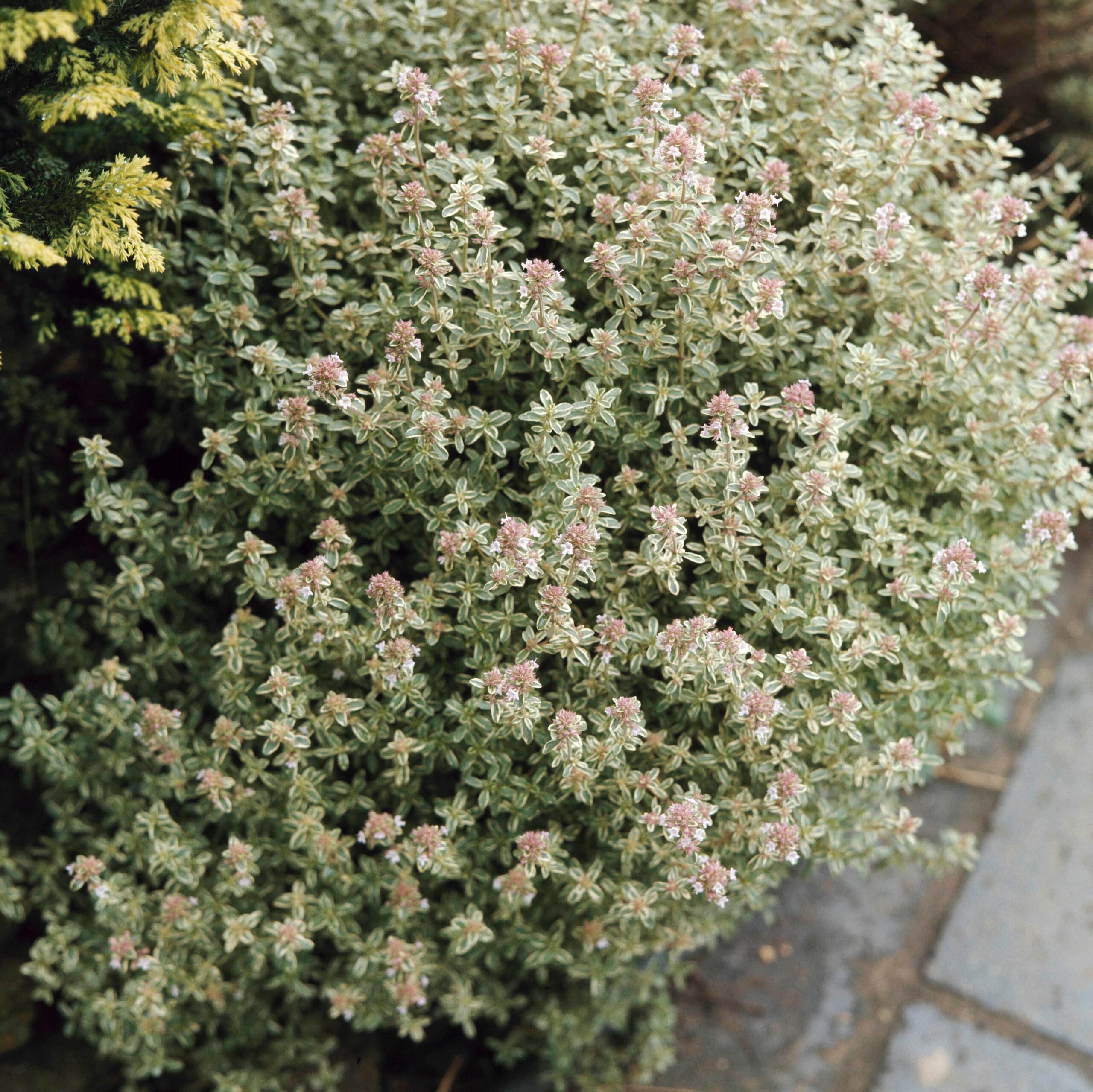
Thymus pulegioides ‘foxley’
£12.50
Frequently Bought Together

Description
Quick Facts
- Common Name: Variegated Wild Thyme, Foxley Thyme
- Botanical Name: Thymus pulegioides ‘Foxley’
- Plant Type: Evergreen (or semi-evergreen) groundcover herb / low, spreading sub-shrub
- Mature Height: 5–15cm
- Mature Spread: 30–60cm (slowly spreading)
- Flowering Period: June to August
- Flower Colour: Pink to rosy-purple
- Foliage: Small green leaves edged creamy-white; aromatic when brushed
- Hardiness: RHS H6 (very hardy; best with sharp drainage)
- Soil Requirements: Very well-drained, light to moderately fertile soil
- Aspect: Full sun (best variegation and flowering)
- Maintenance: Low
Description
Thymus pulegioides ‘Foxley’ is a gorgeous, low-growing thyme with softly variegated foliage and a wonderfully natural, meadowy feel. Its tiny green leaves are edged in creamy-white, creating a bright, tapestry-like mat that weaves beautifully through gravel, between paving, and at the front of sunny borders.
In summer it comes into its own, flowering freely with pink to rosy-purple blooms that are a real magnet for bees and other pollinators. It’s the kind of plant that makes a garden feel alive—fragrant underfoot, full of movement, and effortlessly pretty without ever looking fussy.
Hardy and drought-tolerant once established, ‘Foxley’ is ideal for those tricky, sun-baked spots where you want something low, reliable, and quietly uplifting. It’s also great in pots and troughs, where the variegation can be appreciated up close.
Caragh Garden Notebook
Planting:
Plant in spring or early autumn. Space plants 25–35cm apart for groundcover (closer for quicker knit). Choose a sunny, open position—full sun keeps the variegation crisp and encourages the best flowering. Water in well, then water sparingly once established.
Plant in spring or early autumn. Space plants 25–35cm apart for groundcover (closer for quicker knit). Choose a sunny, open position—full sun keeps the variegation crisp and encourages the best flowering. Water in well, then water sparingly once established.
Soil Preparation:
This thyme thrives in free-draining soil. Improve heavy ground with horticultural grit and compost, or plant on a slight mound/raised bed. In containers, use a gritty compost mix and ensure excellent drainage.
This thyme thrives in free-draining soil. Improve heavy ground with horticultural grit and compost, or plant on a slight mound/raised bed. In containers, use a gritty compost mix and ensure excellent drainage.
Seasonal Care:
After flowering, lightly trim to keep the plant dense and prevent it becoming woody. Avoid hard pruning into old, bare stems. If any plain green shoots appear, remove them to maintain the variegated foliage.
After flowering, lightly trim to keep the plant dense and prevent it becoming woody. Avoid hard pruning into old, bare stems. If any plain green shoots appear, remove them to maintain the variegated foliage.
Pests & Problems:
Very trouble-free. The main risk is winter wet—good drainage prevents root rot.
Very trouble-free. The main risk is winter wet—good drainage prevents root rot.
Design Notes:
Perfect between paving, in gravel gardens, rockeries, troughs, and at the very front of sunny borders. Lovely with sedum, sempervivum, lavender, rosemary, and ornamental grasses. Brilliant for pollinators.
Perfect between paving, in gravel gardens, rockeries, troughs, and at the very front of sunny borders. Lovely with sedum, sempervivum, lavender, rosemary, and ornamental grasses. Brilliant for pollinators.
Propagation:
Easy from softwood cuttings in late spring/summer, or by division in spring.
Easy from softwood cuttings in late spring/summer, or by division in spring.
Related products
-

Geranium maculatum Espresso
£8.50 Select options This product has multiple variants. The options may be chosen on the product page -
Prunus Kiku-shidare-zakura
£165.00 Select options This product has multiple variants. The options may be chosen on the product page -
Clematis montana Fragrant Spring
£20.00 Select options This product has multiple variants. The options may be chosen on the product page -
Prunus cerasifera Nigra / Purple Plum
Price range: £180.00 through £350.00 Select options This product has multiple variants. The options may be chosen on the product page