
Thymus Silver Queen
£12.50
Description
Quick Facts
- Common Name: Silver Queen Thyme
- Botanical Name: Thymus vulgaris ‘Silver Queen’
- Plant Type: Evergreen, aromatic perennial herb
- Mature Height: 15–25cm
- Mature Spread: 30–45cm
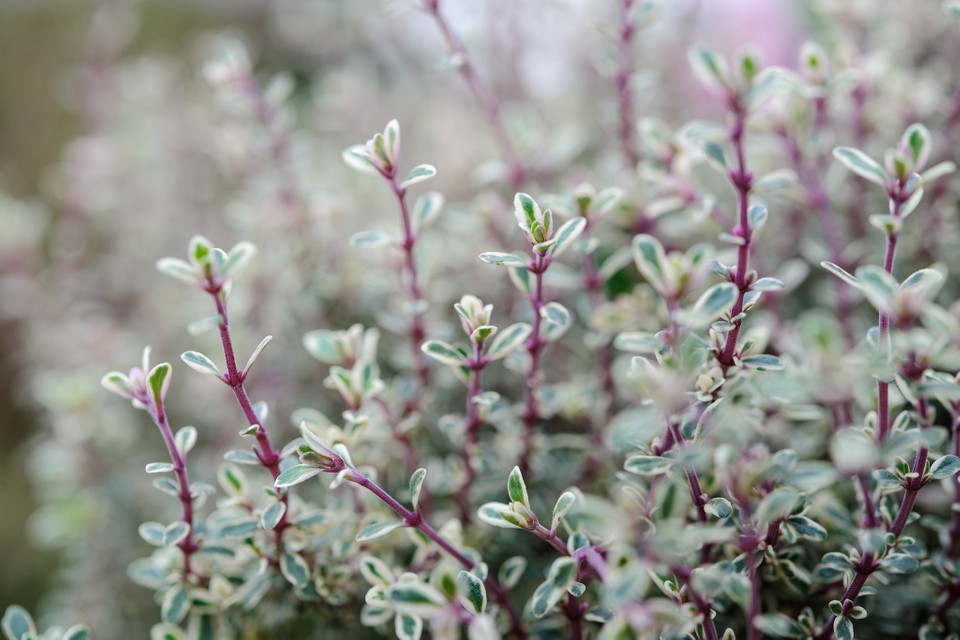
- Foliage: Small, oval, grey-green leaves edged in creamy-white; aromatic and ornamental
- Flowering Period: June to July
- Flower Colour: Pale pink to lilac, borne in clusters
- Hardiness: RHS H6 (hardy throughout UK & Ireland)
- Soil Requirements: Well-drained, light, moderately fertile soil; prefers neutral to alkaline; drought-tolerant once established
- Aspect: Full sun (essential for best growth and flavour)
- Maintenance: Low
Description
Thymus vulgaris ‘Silver Queen’ is a delightful, variegated form of common thyme, prized for both its culinary value and its ornamental appeal. The small, aromatic leaves are edged in creamy-white, creating a silvery shimmer that stands out in herb gardens, rockeries, and containers. When summer arrives, the plant is dotted with clusters of pale pink to lilac flowers, which are loved by bees and other pollinators.
‘Silver Queen’ forms a neat, spreading mound, perfect for edging paths, filling gaps in gravel or Mediterranean-style gardens, or trailing over the edge of pots and raised beds. It’s as tough as it is beautiful—thriving in poor, stony soils and coping well with drought once established. The foliage is highly aromatic, making it an excellent culinary herb for seasoning meats, vegetables, and Mediterranean dishes.
This variety is evergreen in mild areas, providing year-round structure and fragrance. Its low-growing, mat-forming habit also helps suppress weeds and soften hard landscaping.
Caragh Garden Notebook
Planting:
Space plants 20–30cm apart for ground cover or edging. Plant container-grown specimens in spring (March–May) or early autumn (September). Choose a sunny, open site for best foliage colour and essential oil content. Dig a small hole, loosen the soil well, and incorporate grit if your ground is heavy or clay-based. Plant at the same depth as in the pot, firm in gently, water well, and mulch lightly with gravel.
Space plants 20–30cm apart for ground cover or edging. Plant container-grown specimens in spring (March–May) or early autumn (September). Choose a sunny, open site for best foliage colour and essential oil content. Dig a small hole, loosen the soil well, and incorporate grit if your ground is heavy or clay-based. Plant at the same depth as in the pot, firm in gently, water well, and mulch lightly with gravel.
Soil Preparation:
Prefers well-drained, light, moderately fertile soil. Avoid heavy, waterlogged ground. On clay, plant on a mound or raised bed and add grit to improve drainage. Neutral to alkaline soil is ideal—lime if your soil is very acidic.
Prefers well-drained, light, moderately fertile soil. Avoid heavy, waterlogged ground. On clay, plant on a mound or raised bed and add grit to improve drainage. Neutral to alkaline soil is ideal—lime if your soil is very acidic.
Seasonal Care:
Very low maintenance. Trim lightly after flowering to keep plants compact and encourage fresh growth. Avoid hard pruning into old wood. Water only during extended dry spells in the first year; established plants are drought-tolerant.
Very low maintenance. Trim lightly after flowering to keep plants compact and encourage fresh growth. Avoid hard pruning into old wood. Water only during extended dry spells in the first year; established plants are drought-tolerant.
Container Growing:
Excellent in pots, troughs, or window boxes. Use a gritty, free-draining compost. Water sparingly and ensure pots never sit in water.
Excellent in pots, troughs, or window boxes. Use a gritty, free-draining compost. Water sparingly and ensure pots never sit in water.
Pests & Problems:
Generally trouble-free. Occasionally watch for aphids or root rot in poorly drained soils.
Generally trouble-free. Occasionally watch for aphids or root rot in poorly drained soils.
Design Notes:
Superb for herb gardens, rockeries, gravel gardens, and as a path or wall edge. Pairs beautifully with lavender, rosemary, oregano, and Mediterranean perennials. Also excellent for pollinator-friendly planting.
Superb for herb gardens, rockeries, gravel gardens, and as a path or wall edge. Pairs beautifully with lavender, rosemary, oregano, and Mediterranean perennials. Also excellent for pollinator-friendly planting.
Related products
-

Tilia cordata ‘Erecta’
Price range: £550.00 through £600.00 Select options This product has multiple variants. The options may be chosen on the product page -
Erica Collection (Heather & Heath)
Price range: £5.50 through £10.50 Select options This product has multiple variants. The options may be chosen on the product page -
Campanula White Clips
£8.50 Select options This product has multiple variants. The options may be chosen on the product page -
Hydrangea paniculata Limelight
Price range: £25.00 through £95.00 Select options This product has multiple variants. The options may be chosen on the product page