
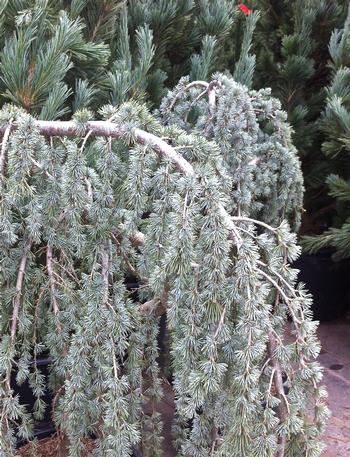
Cedrus atlantica Glauca Pendula / Blue Weeping Cedars
£180.00
Frequently Bought Together


Description
Quick Facts
- Botanical name: Cedrus atlantica ‘Glauca Pendula’
- Common name: Weeping Blue Atlas Cedar
- Plant type: Evergreen conifer
- Foliage: Silvery-blue needles
- Habit: Weeping / cascading (can be trained or left to spill)
- Position: Full sun (best colour) to light shade
- Soil: Moist but free-draining; avoid waterlogged ground
- Hardiness: Hardy in Ireland in a sheltered spot
- Ultimate size: Variable — depends on training/staking and site
- Growth rate: Moderate
- Best for: Specimen planting, banks/slopes, modern gardens, architectural focal points, large containers (with care)
A true statement plant, Cedrus atlantica ‘Glauca Pendula’ brings instant structure and year-round impact. Its silvery-blue needles and naturally cascading habit create a sculptural focal point that looks like living garden architecture — striking in winter, breathtaking in summer, and always a conversation starter.
One of the joys of this variety is how it can be shaped to suit your space: allow it to spill and sweep over a bank or wall, or train it upwards on a stake to create a taller feature, with flowing branches draping down.
Why you’ll love it
- Silvery-blue foliage for year-round colour
- Weeping, cascading shape with strong architectural presence
- Can be trained for height and drama, or left to spill naturally
- A standout specimen that adds instant maturity to a garden
Best position
Plant in full sun for the strongest blue colour. Choose a sheltered spot away from harsh, drying winds, especially when young.
Soil & planting tips
Prefers free-draining soil. It’s tolerant once established, but dislikes sitting wet in winter. Improve heavy ground with grit and organic matter, and avoid low-lying areas that hold water.
Care notes
Water regularly in the first year to help it establish. Minimal pruning is needed — remove only damaged growth. If you want a taller form, keep a leader tied to a stake and let the side branches drape naturally.
Caragh Garden Notebook
Use this as an “anchor plant” to make the garden feel established. It looks gorgeous with soft textures around it — ornamental grasses, low evergreens, and pale flowers (whites, soft blues and silvers are especially good with the blue needles).
Related products
-

Acer palmatum ‘Beni Maiko’
£1,200.00 Select options This product has multiple variants. The options may be chosen on the product page -
Juniper ‘Horstmann’ Pendula
£2,500.00 Select options This product has multiple variants. The options may be chosen on the product page -
Cedrus atlantica Glauca
Price range: £240.00 through £1,500.00 Select options This product has multiple variants. The options may be chosen on the product page -
Betula pendula ‘Youngii’ / Weeping Birch ‘Youngii’
Price range: £98.00 through £280.00 Select options This product has multiple variants. The options may be chosen on the product page