Prunus ‘Oshidori’ – dwarf ornamental cherry
£30.00
Frequently Bought Together


Description
Quick Facts
- Common Name: Oshidori Cherry
- Botanical Name: Prunus ‘Oshidori’
- Plant Type: Deciduous ornamental small tree or large shrub
- Mature Height: 2.5–4m
- Mature Spread: 2–3m
- Flowering Period: April
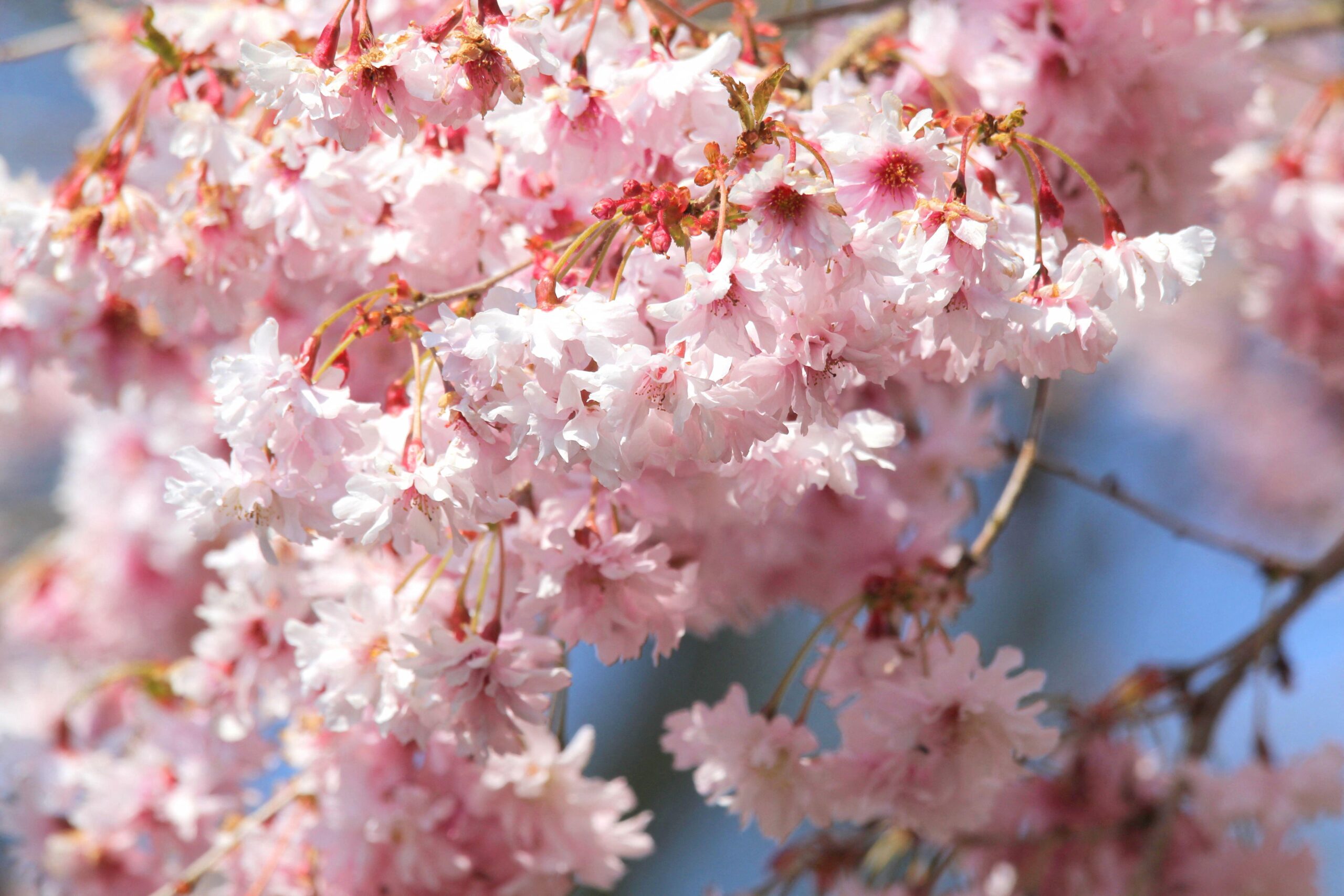
- Flower Colour: Large, semi-double, deep pink to rose-red blooms
- Foliage: Mid-green, ovate leaves; yellow and orange autumn colour
- Hardiness: RHS H6 (hardy throughout UK & Ireland)
- Soil Requirements: Moist, well-drained, moderately fertile
- Aspect: Full sun to light shade (best flowering in sun)
- Maintenance: Low
Description
Prunus ‘Oshidori’ is a beautiful, compact flowering cherry, treasured for its profusion of large, semi-double, deep pink to rose-red blooms in mid-spring. The flowers are especially showy—richly coloured and held in generous clusters along the branches, creating a striking display that stands out even from a distance. The blossom appears just as the new leaves emerge, making the whole tree glow with colour.
Through summer, the tree forms a neat, rounded canopy of mid-green leaves, providing gentle shade and structure. In autumn, the foliage turns lovely shades of yellow and orange, adding a second season of interest before leaf fall.
‘Oshidori’ is naturally compact and well-branched, making it ideal for smaller gardens, lawns, or as a specimen in mixed borders. It is hardy, easy to grow, and needs little maintenance beyond occasional shaping after flowering. Its manageable size and dramatic spring show make it a favourite for both traditional and contemporary gardens.
Caragh Garden Notebook
Planting:
Space trees 2–3m apart for groupings or use singly as a specimen. Plant container-grown specimens in autumn (September–November) or spring (March–May). Choose a sunny, sheltered position for the best flowering and autumn colour. Dig a generous hole, loosen the soil well, and incorporate compost or well-rotted manure to support establishment. Plant at the same depth as in the pot, firm in gently, water thoroughly, and mulch.
Space trees 2–3m apart for groupings or use singly as a specimen. Plant container-grown specimens in autumn (September–November) or spring (March–May). Choose a sunny, sheltered position for the best flowering and autumn colour. Dig a generous hole, loosen the soil well, and incorporate compost or well-rotted manure to support establishment. Plant at the same depth as in the pot, firm in gently, water thoroughly, and mulch.
Soil Preparation:
Prefers moist, well-drained, moderately fertile soil. Avoid waterlogged or very dry ground. Improve heavy clay with compost and grit to aid drainage. Mulch annually to conserve moisture and feed the soil.
Prefers moist, well-drained, moderately fertile soil. Avoid waterlogged or very dry ground. Improve heavy clay with compost and grit to aid drainage. Mulch annually to conserve moisture and feed the soil.
Seasonal Care:
Low maintenance. Prune only to remove dead, damaged, or crossing branches, ideally after flowering. Water during dry spells in the first year. Feed in early spring with a balanced fertiliser if growth is slow.
Low maintenance. Prune only to remove dead, damaged, or crossing branches, ideally after flowering. Water during dry spells in the first year. Feed in early spring with a balanced fertiliser if growth is slow.
Pests & Problems:
Generally trouble-free. Watch for aphids and caterpillars on young growth. Good hygiene and regular checks help keep plants healthy.
Generally trouble-free. Watch for aphids and caterpillars on young growth. Good hygiene and regular checks help keep plants healthy.
Design Notes:
Perfect for small gardens, lawns, mixed borders, or as a feature tree. The vibrant spring blossom and autumn foliage make it a standout through multiple seasons. Underplant with spring bulbs or low perennials for added impact.
Perfect for small gardens, lawns, mixed borders, or as a feature tree. The vibrant spring blossom and autumn foliage make it a standout through multiple seasons. Underplant with spring bulbs or low perennials for added impact.
Related products
-

Camellia japonica Rosso – 1/2 Standard
£550.00 Select options This product has multiple variants. The options may be chosen on the product page -

Camellia Japonica Rosso
Price range: £195.00 through £240.00 Select options This product has multiple variants. The options may be chosen on the product page -
Erica Collection (Heather & Heath)
Price range: £5.50 through £10.50 Select options This product has multiple variants. The options may be chosen on the product page -
Prunus cerasifera Nigra / Purple Plum
Price range: £180.00 through £350.00 Select options This product has multiple variants. The options may be chosen on the product page